How Tiered Loyalty Programs Shape Player Retention in Licensed Digital Betting Operations
Petra Bennett · Jun 8, 2026

How Tiered Loyalty Programs Shape Player Retention in Licensed Digital Betting Operations
Operators in licensed digital wagering markets have increasingly adopted tiered loyalty structures to organize player engagement, and data from multiple jurisdictions shows these systems correlate with distinct retention patterns across different user segments. These programs typically divide participants into levels such as entry, intermediate, and premium tiers, where higher status unlocks escalating rewards including cashback percentages, exclusive event access, and personalized betting credits, while lower tiers receive baseline incentives like standard deposit matches.
Core Mechanics of Tiered Systems in Regulated Markets
Structure begins with point accumulation tied to wagering volume, where operators assign multipliers based on game type and stake size, then reset or carry over points at fixed intervals to maintain momentum. Researchers at institutions including the University of Nevada, Las Vegas have documented how progression thresholds encourage consistent activity, with players often reaching intermediate tiers within the first three months of enrollment when deposit requirements align with average session values. Retention data indicates that once users cross into higher tiers, churn rates drop by measurable margins compared to those remaining at entry levels, though the effect varies by jurisdiction and product mix.
Program rules also incorporate time-bound challenges and tier maintenance criteria, such as minimum monthly activity thresholds that prevent automatic demotion. According to reports compiled by the Nevada Gaming Control Board, these maintenance features sustain engagement among mid-tier participants while creating friction for those who reduce activity after initial qualification. Operators adjust these parameters seasonally, and observers note that modifications introduced ahead of major sporting calendars tend to produce temporary spikes in both point earning and retention metrics.
Observed Retention Patterns Across User Cohorts
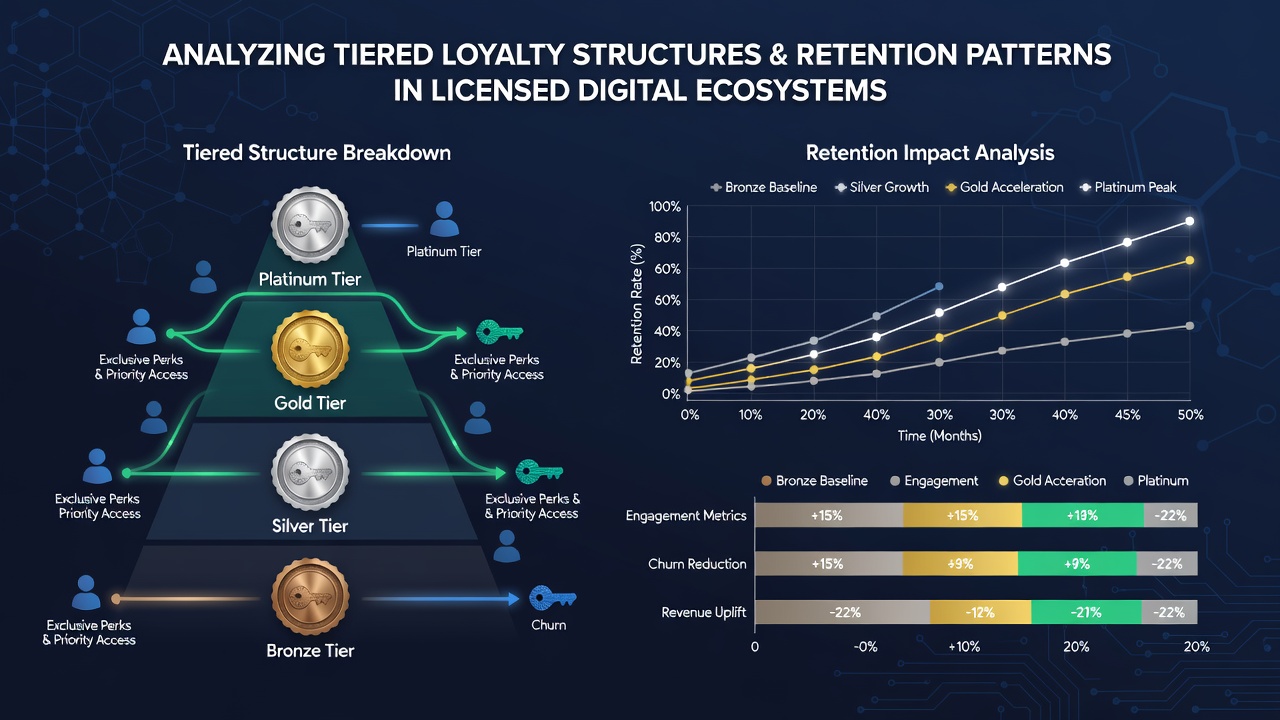
Longitudinal tracking reveals that premium tier members exhibit the strongest retention, with continued play extending well beyond twelve months in multiple datasets, whereas entry-level participants show higher attrition after promotional periods conclude. Intermediate groups display mixed outcomes, often stabilizing when operators introduce targeted nudges such as accelerated point bonuses or personalized milestone rewards. Studies indicate that retention improvements concentrate among users who perceive tangible progression, while those who plateau at lower tiers demonstrate shorter engagement windows.
Geographic differences emerge clearly when comparing North American and European markets, with Canadian provincial data suggesting stronger retention lifts from tiered cashback structures than from status perks alone. In contrast, Australian regulatory filings highlight that loyalty tiers linked to responsible gambling tools, such as voluntary spending caps, maintain retention without corresponding increases in harm indicators. As of June 2026, several multi-state U.S. operators reported that tiered programs integrated with live event betting produced retention rates approximately fifteen percent above non-tiered baselines, though these figures reflect aggregated platform performance rather than individual behavior.
Factors Influencing Effectiveness and Regional Data
Communication frequency and reward relevance play measurable roles in sustaining tier momentum, with operators using segmented notifications that reference specific tier benefits rather than generic promotions. A report from the Ontario Lottery and Gaming Corporation found that players receiving tailored tier progress updates retained activity longer than those exposed to uniform messaging across all levels. External economic conditions also intersect with these patterns, as participation in higher tiers tends to remain stable during periods of steady employment while entry-tier churn accelerates when disposable income contracts.
Product diversification within tiers further shapes outcomes, since operators granting premium status advantages across both sports and casino verticals observe broader retention than those restricting perks to single categories. Industry analyses from the European Gaming and Betting Association indicate that cross-vertical tier benefits reduce migration between competing platforms, particularly when loyalty points transfer across different game formats without additional conversion steps. Yet retention advantages appear most pronounced when operators combine tiered structures with transparent responsible gambling features, allowing users to set personal limits that align with their current tier status.
Conclusion
Tiered loyalty structures continue to evolve within licensed digital wagering environments, and available data shows clear associations between tier progression and extended retention periods across multiple regulatory frameworks. Operators refine these systems through ongoing analysis of point-earning velocity, maintenance thresholds, and cross-product engagement, while regional regulators track aggregate effects on player behavior. The patterns documented through 2026 underscore that retention outcomes depend on alignment between reward design, communication strategy, and external market conditions rather than tier architecture alone.