Instant Transaction Ecosystems: How Real-Time Payments Enable Seamless Transitions Between Sports Wagers and Casino Bonuses on Mobile Devices
Petra Hartmann · Jul 13, 2026
Instant Transaction Ecosystems: How Real-Time Payments Enable Seamless Transitions Between Sports Wagers and Casino Bonuses on Mobile Devices
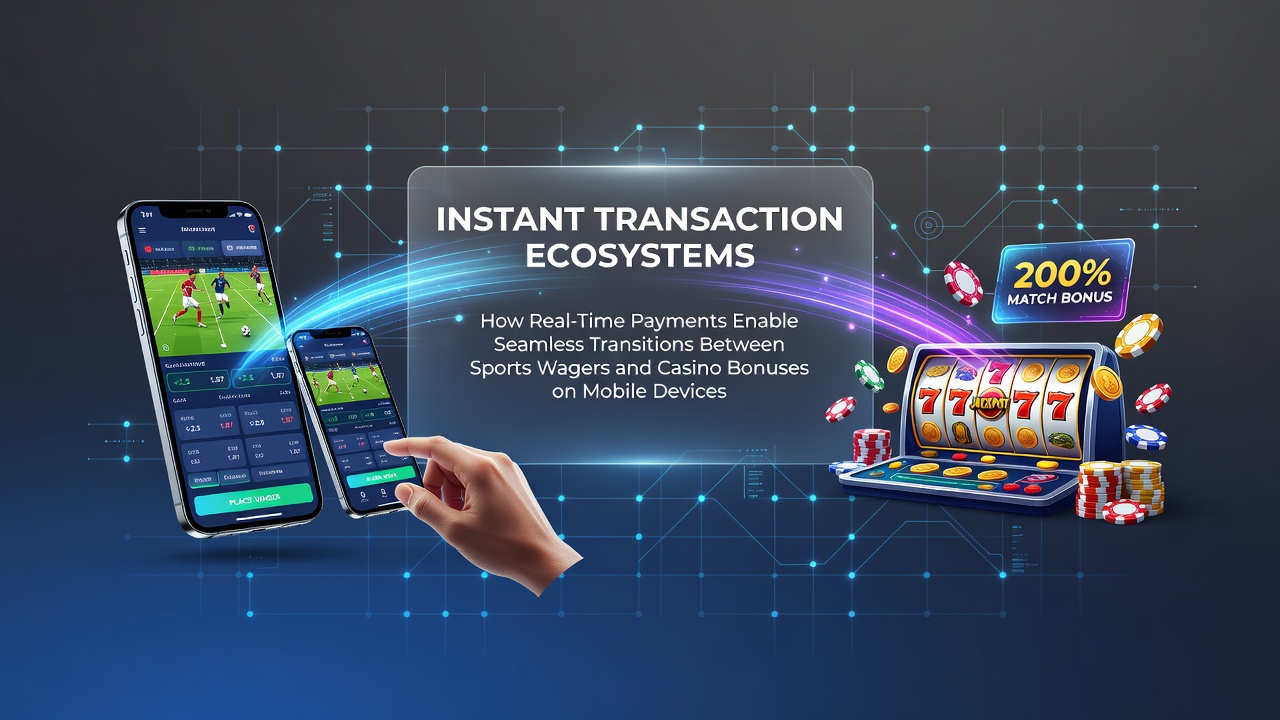
Mobile platforms now integrate payment rails that move funds in seconds rather than hours or days, and this shift supports continuous movement between live sports markets and casino promotions without separate funding steps. Real-time settlement systems connect directly to operator wallets so deposits appear as available balance the moment a user confirms a transfer through banking apps or digital payment providers. Operators deploy application programming interfaces that link sports betting engines with casino bonus ledgers, allowing a single authentication event to credit both sides of an account. When a player places a wager on an in-play football match and then switches to a slot title carrying a deposit match offer, the same tokenized session manages the balance update across both verticals. Transaction logs record each movement with timestamps measured in milliseconds, which satisfies regulatory audit requirements while maintaining user session continuity. Payment networks such as The Clearing House RTP network in the United States and similar instant rails in Canada and Australia process these transfers outside traditional batch cycles. Data from the American Gaming Association indicates that states with licensed mobile betting saw average deposit confirmation times drop below four seconds by early 2026. Similar figures appear in reports covering European operators using the SEPA Instant Credit Transfer scheme, where cross-border casino bonus claims execute at comparable speeds. Seamless transitions rely on unified risk engines that evaluate both sports exposure and casino playthrough simultaneously. A user who deposits fifty units to cover a live tennis bet can immediately allocate remaining funds to a blackjack table with an attached free spin package, because the backend treats the entire balance as interchangeable. Bonus wagering meters update in real time rather than after nightly reconciliation, which prevents disputes over qualifying activity across verticals. Security protocols wrap each transfer in device-bound tokens and behavioral analytics. Fingerprint or facial recognition replaces repeated password entry, while machine learning models flag unusual patterns before funds leave the user account. July 2026 data releases from several North American regulators showed that platforms using these layered checks reported fewer than two disputed transactions per ten thousand mobile sessions involving combined sports and casino activity. Wallet aggregation services further compress the sequence. A single stored payment instrument appears across multiple operator skins, so a user switching from one licensed app to another does not re-enter card or bank details. The underlying rails still settle instantly, and bonus eligibility carries forward when operators share the same payment processor under common licensing frameworks.  Developers embed push notifications that confirm both the sports stake and the casino bonus activation within the same alert thread. This design reduces context switching on smaller screens and keeps users inside the original session. Observers note that retention metrics improve when players complete a sports wager followed by casino spins without leaving the application or re-authenticating. Regulatory sandboxes in several jurisdictions have tested bundled transaction reporting, where one record covers a sports wager funded by an instant deposit and the subsequent casino bonus claim. These pilots demonstrated reduced reconciliation workloads for compliance teams while preserving full traceability. Academic papers published by research groups at universities in Australia and the Netherlands examined transaction graphs from anonymized datasets and confirmed that real-time rails do not increase the incidence of erroneous bonus claims when proper velocity controls remain active. Operators also deploy conditional bonus logic that activates only after a qualifying sports bet settles. The payment system holds the bonus in a pending state until the wager result posts, then releases the funds or spins without requiring another deposit action. Such mechanics appear in markets from Ontario to several Australian states where regulators permit cross-vertical promotions under single-account rules. Infrastructure costs have declined as cloud-based payment gateways scale horizontally. Smaller operators now access the same instant rails previously reserved for large groups, which broadens the availability of seamless sports-to-casino flows on mobile devices. Transaction fee structures typically range between 0.2 and 0.8 percent depending on volume commitments, figures cited in industry association briefings covering multiple continents. Conclusion
Real-time payment ecosystems continue to shorten the interval between intent and action across sports wagering and casino bonus environments. Mobile applications that combine unified wallets, instant settlement rails, and synchronized bonus engines deliver the technical foundation for uninterrupted movement between verticals while meeting audit and security standards set by diverse regulatory bodies.
Developers embed push notifications that confirm both the sports stake and the casino bonus activation within the same alert thread. This design reduces context switching on smaller screens and keeps users inside the original session. Observers note that retention metrics improve when players complete a sports wager followed by casino spins without leaving the application or re-authenticating. Regulatory sandboxes in several jurisdictions have tested bundled transaction reporting, where one record covers a sports wager funded by an instant deposit and the subsequent casino bonus claim. These pilots demonstrated reduced reconciliation workloads for compliance teams while preserving full traceability. Academic papers published by research groups at universities in Australia and the Netherlands examined transaction graphs from anonymized datasets and confirmed that real-time rails do not increase the incidence of erroneous bonus claims when proper velocity controls remain active. Operators also deploy conditional bonus logic that activates only after a qualifying sports bet settles. The payment system holds the bonus in a pending state until the wager result posts, then releases the funds or spins without requiring another deposit action. Such mechanics appear in markets from Ontario to several Australian states where regulators permit cross-vertical promotions under single-account rules. Infrastructure costs have declined as cloud-based payment gateways scale horizontally. Smaller operators now access the same instant rails previously reserved for large groups, which broadens the availability of seamless sports-to-casino flows on mobile devices. Transaction fee structures typically range between 0.2 and 0.8 percent depending on volume commitments, figures cited in industry association briefings covering multiple continents. Conclusion
Real-time payment ecosystems continue to shorten the interval between intent and action across sports wagering and casino bonus environments. Mobile applications that combine unified wallets, instant settlement rails, and synchronized bonus engines deliver the technical foundation for uninterrupted movement between verticals while meeting audit and security standards set by diverse regulatory bodies.
Mobile platforms now integrate payment rails that move funds in seconds rather than hours or days, and this shift supports continuous movement between live sports markets and casino promotions without separate funding steps. Real-time settlement systems connect directly to operator wallets so deposits appear as available balance the moment a user confirms a transfer through banking apps or digital payment providers. Operators deploy application programming interfaces that link sports betting engines with casino bonus ledgers, allowing a single authentication event to credit both sides of an account. When a player places a wager on an in-play football match and then switches to a slot title carrying a deposit match offer, the same tokenized session manages the balance update across both verticals. Transaction logs record each movement with timestamps measured in milliseconds, which satisfies regulatory audit requirements while maintaining user session continuity. Payment networks such as The Clearing House RTP network in the United States and similar instant rails in Canada and Australia process these transfers outside traditional batch cycles. Data from the American Gaming Association indicates that states with licensed mobile betting saw average deposit confirmation times drop below four seconds by early 2026. Similar figures appear in reports covering European operators using the SEPA Instant Credit Transfer scheme, where cross-border casino bonus claims execute at comparable speeds. Seamless transitions rely on unified risk engines that evaluate both sports exposure and casino playthrough simultaneously. A user who deposits fifty units to cover a live tennis bet can immediately allocate remaining funds to a blackjack table with an attached free spin package, because the backend treats the entire balance as interchangeable. Bonus wagering meters update in real time rather than after nightly reconciliation, which prevents disputes over qualifying activity across verticals. Security protocols wrap each transfer in device-bound tokens and behavioral analytics. Fingerprint or facial recognition replaces repeated password entry, while machine learning models flag unusual patterns before funds leave the user account. July 2026 data releases from several North American regulators showed that platforms using these layered checks reported fewer than two disputed transactions per ten thousand mobile sessions involving combined sports and casino activity. Wallet aggregation services further compress the sequence. A single stored payment instrument appears across multiple operator skins, so a user switching from one licensed app to another does not re-enter card or bank details. The underlying rails still settle instantly, and bonus eligibility carries forward when operators share the same payment processor under common licensing frameworks.
Developers embed push notifications that confirm both the sports stake and the casino bonus activation within the same alert thread. This design reduces context switching on smaller screens and keeps users inside the original session. Observers note that retention metrics improve when players complete a sports wager followed by casino spins without leaving the application or re-authenticating. Regulatory sandboxes in several jurisdictions have tested bundled transaction reporting, where one record covers a sports wager funded by an instant deposit and the subsequent casino bonus claim. These pilots demonstrated reduced reconciliation workloads for compliance teams while preserving full traceability. Academic papers published by research groups at universities in Australia and the Netherlands examined transaction graphs from anonymized datasets and confirmed that real-time rails do not increase the incidence of erroneous bonus claims when proper velocity controls remain active. Operators also deploy conditional bonus logic that activates only after a qualifying sports bet settles. The payment system holds the bonus in a pending state until the wager result posts, then releases the funds or spins without requiring another deposit action. Such mechanics appear in markets from Ontario to several Australian states where regulators permit cross-vertical promotions under single-account rules. Infrastructure costs have declined as cloud-based payment gateways scale horizontally. Smaller operators now access the same instant rails previously reserved for large groups, which broadens the availability of seamless sports-to-casino flows on mobile devices. Transaction fee structures typically range between 0.2 and 0.8 percent depending on volume commitments, figures cited in industry association briefings covering multiple continents. Conclusion
Real-time payment ecosystems continue to shorten the interval between intent and action across sports wagering and casino bonus environments. Mobile applications that combine unified wallets, instant settlement rails, and synchronized bonus engines deliver the technical foundation for uninterrupted movement between verticals while meeting audit and security standards set by diverse regulatory bodies.