Machine Learning Transforms Free Bet Optimization Across Sports Disciplines
Finley Vogel · Aug 10, 2026
Machine Learning Transforms Free Bet Optimization Across Sports Disciplines
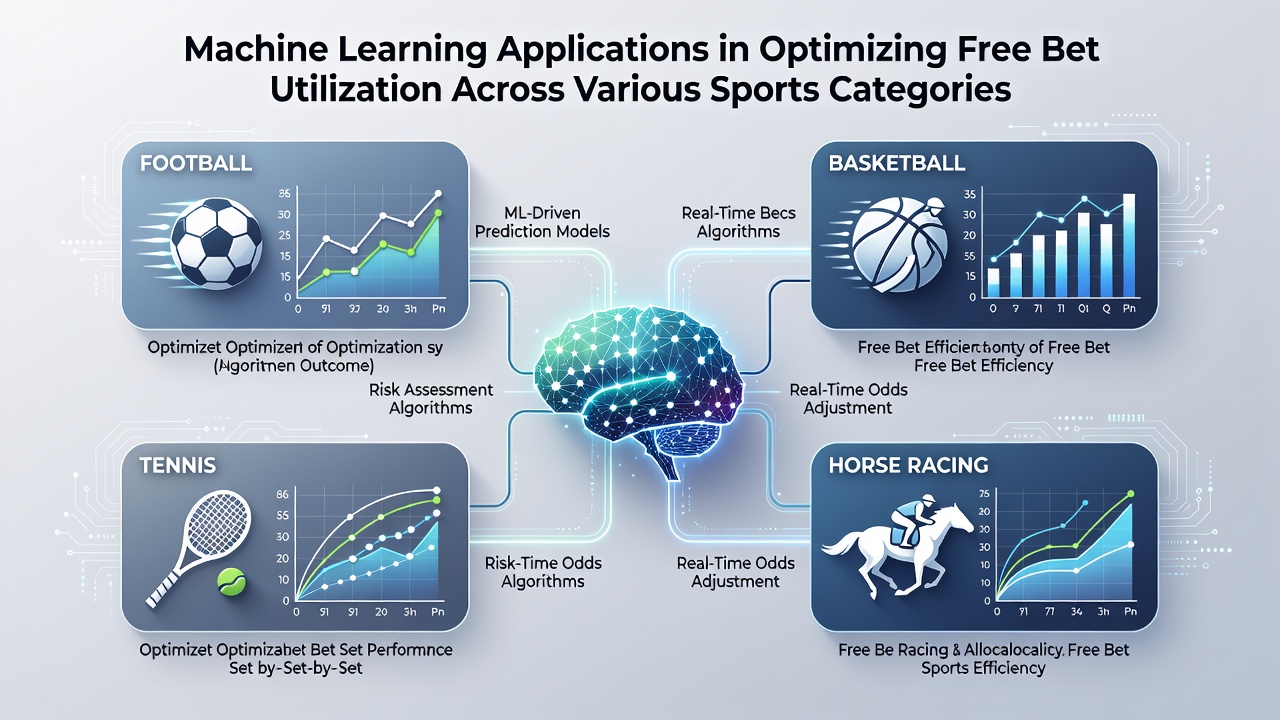
Researchers have applied machine learning models to free bet management in ways that connect historical performance data with real-time market variables across multiple sports, and these systems now process odds movements, team statistics, and player injury reports in coordinated sequences. Data from industry reports shows that predictive algorithms identify patterns in free bet rollover requirements while adjusting stake distributions based on expected value calculations derived from past outcomes. Observers note that such approaches integrate reinforcement learning techniques to refine decisions over successive betting cycles, particularly when operators introduce promotional offers tied to specific events in football, tennis, and horse racing.
Predictive Modeling in Football and Basketball Markets
Football betting records reveal that neural network architectures trained on league-wide datasets forecast goal probabilities with higher precision than traditional statistical methods, allowing users to allocate free bets toward matches where implied probabilities diverge from model outputs. Studies from academic institutions indicate these models incorporate variables such as possession percentages, shot locations, and weather conditions to generate probability distributions that guide stake sizing. In basketball, similar frameworks track point spreads and over-under totals by analyzing pace metrics and defensive efficiency ratings, with algorithms updating predictions as live data streams arrive during games. Those who have examined these applications find that free bet utilization improves when models flag opportunities where bookmaker margins leave exploitable gaps in specific quarters or halves.
Applications in Tennis, Horse Racing, and Emerging Categories
Tennis markets present distinct challenges because individual match outcomes depend on surface type, head-to-head records, and fatigue indicators, yet gradient boosting machines have demonstrated consistent accuracy in ranking player win probabilities across Grand Slam tournaments. Machine learning pipelines combine these rankings with free bet conversion rates to prioritize bets on underdogs whose odds exceed model thresholds. Horse racing data sets, meanwhile, feed into ensemble methods that evaluate track conditions, jockey performance histories, and pace scenarios, producing recommendations that align free bet stakes with races where tote odds show statistical mispricings. Additional categories such as baseball and rugby now see deployment of time-series forecasting tools that process inning-by-inning or set-by-set developments to extend the lifespan of promotional credits. Figures from the American Gaming Association illustrate rising adoption of these techniques among operators handling multi-sport portfolios.

Reinforcement Learning for Dynamic Stake Allocation
Reinforcement learning agents simulate thousands of betting sequences using historical free bet data, learning policies that maximize long-term returns while respecting wagering requirements imposed by different sportsbooks. These agents adjust actions in response to changing odds and remaining balance constraints, often favoring smaller, diversified positions across concurrent events rather than concentrating value on single outcomes. Evidence from research papers published by the Australian Gambling Research Centre highlights how such agents reduce variance in net returns when tested against fixed-stake baselines in simulated environments covering football and tennis seasons. Operators report that integration of these agents into mobile platforms enables users to receive real-time suggestions that align with both market liquidity and personal risk parameters.
Data Integration and Feature Engineering Practices
Effective models rely on feature engineering that merges structured data from official league feeds with unstructured sources such as social media sentiment and injury news timelines. Natural language processing extracts relevant signals from press conferences and training reports, feeding them into classification layers that flag potential value shifts before odds adjust. In August 2026, several platforms expanded their feature sets to include granular tracking data from wearable devices in basketball and football, further refining the inputs available to optimization engines. Those who have reviewed system architectures note that dimensionality reduction techniques prevent overfitting while preserving the most predictive variables across diverse sports categories.
Conclusion
Machine learning continues to reshape how free bets are evaluated and deployed across football, basketball, tennis, horse racing, and additional disciplines through layered predictive and reinforcement approaches. Data integration pipelines and dynamic allocation strategies provide structured pathways for users to align promotional credits with statistically identified opportunities, while ongoing research refines model robustness against evolving market conditions.